





**Will You Need a CT Scan for Root Canal Treatment in Mainland China?**
In recent years, more Hong Kong residents are opting for dental treatments in Mainland China, with root canal treatment (also known as endodontic therapy) being one of the most popular procedures. However, a common question arises before planning such a visit: "Will the dentist in Mainland China require me to get a CT scan before the root canal treatment?" This question deserves thorough exploration, as it involves treatment procedures, diagnostic accuracy, and safety concerns.
**Why Some Dental Clinics Recommend CT Scans**
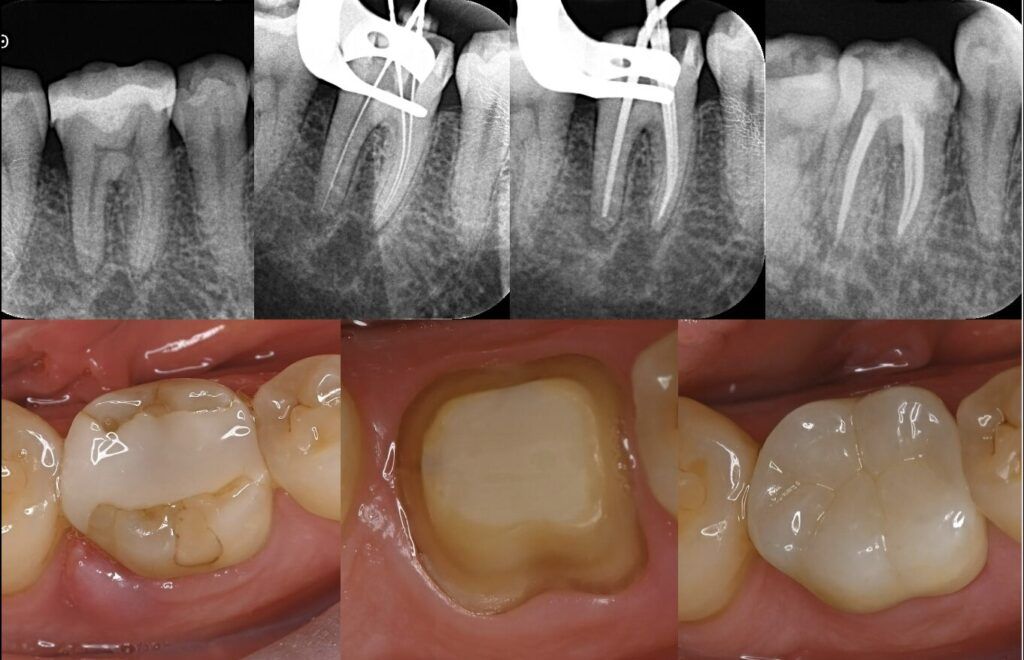
Root canal treatment is a precise dental procedure where the dentist needs to clear out infections or necrotic nerves within the tooth root, sealing the tooth to prevent further bacterial invasion. Traditionally, dentists use regular X-rays to assess the condition of the roots. However, in cases where the roots are curved, cracked, or difficult to visualize, a dental CT (commonly known as CBCT) can provide detailed 3D scans. This allows dentists to better understand the internal structure of the roots, thereby minimizing risks during treatment.
**Differences in Practices Between Hong Kong and Mainland China**
Dental clinics in Hong Kong typically decide whether a CT scan is necessary based on the patient’s specific condition, rather than recommending it for everyone initially. On the other hand, in Mainland China, some large dental centers, equipped with comprehensive facilities, tend to suggest a CT scan to ensure thorough diagnosis, particularly for complex procedures like root canal treatment or implants. In some instances, clinics may have on-site CT machines, making it convenient to perform the scan immediately. Nonetheless, if regular X-rays are deemed sufficient, many dentists may not opt for an additional CT scan.
**Considerations for Patients**
Firstly, it is important to understand that the purpose of a CT scan is to aid in precise diagnosis rather than being a routine procedure. If your dentist explains that your root might be curved or the extent of infection unclear, a CT scan might be beneficial. Secondly, while dental CT radiatio
n is relatively low, it is still a medical examination and should not be done unnecessarily. Thirdly, inquire about the necessity and intended use of the CT scan data with your dentist, and make an informed decision once you feel assured.
**Preparation Before Heading to Mainland China**
If you plan to undergo a root canal treatment in Mainland China, consider visiting a dentist in Hong Kong first to take X-rays and bring them along for the dentist there to review. Sometimes, these X-rays are sufficient for diagnosis, sparing you from needing another CT scan. Alternatively, if your dental condition is complex, such as having undergone multiple dental surgeries or possessing uniquely shaped roots, a CT scan could help your dentist perform more detailed work, potentially reducing the occurrence of complications.
**Treatment Experience and Communication**
While many dentists in Mainland China are highly skilled, the slight differences in medical terminology might pose a communication challenge despite both parties speaking Chinese. Simplify your questions to ensure you understand each step of the treatment process. Additionally, prepare documentation of your dental diagnosis and relevant film data from Hong Kong in advance, allowing the dentist in Mainland China to quickly grasp your condition and avoid replicating tests.
**Conclusion**
Whether you will need a CT scan for root canal treatment in Mainland China largely depends on your dental condition and the dentist’s diagnostic approach. In certain cases, a CT scan serves as a valuable tool to significantly enhance treatment success rates. However, if your situation is straightforward and regular X-rays are sufficiently clear, an additional CT scan might not be necessary. Effective communication with your dentist to understand the rationale behind each step is crucial for a stress-free treatment experience.
Ultimately, whether in Hong Kong or Mainland China, dental treatment principles remain consistent—safety, accuracy, and appropriateness. Patients need to understand their own needs and trust professional judgement to ensure optimal treatment outcomes and protection during the process.
















