




**Will Root Canal Treatment in Mainland Affect Neighboring Teeth?**
In recent years, many people have started considering traveling to Shenzhen, Guangzhou, and other areas in Mainland China for dental treatments due to cost savings and variety of services available, including root canal treatments. A common concern among Hong Kong residents is, "Will a root canal treatment affect the neighboring teeth?" This worry is especially prevalent when they first hear about the procedure referred to as "nerve extraction." Today, we aim to address these concerns in a simple and relatable manner.
**What is a Root Canal Treatment?**
Simply put, a root canal treatment occurs when the dental pulp inside a tooth becomes inflamed or infected. A dentist will use specialized tools to remove the damaged nerve and infected tissues, followed by disinfecting, filling, and sealing the root canal. The primary goal is to preserve the natural tooth and avoid extraction. For many, its the last step in saving a tooth.
**How Can the Treatment Affect Neighboring Teeth?**
Root canal treatment is focused on a single tooth, targeting the infected pulp with no direct contact with adjacent teeth in principle. However, certain situations may indirectly impact neighboring teeth, such as:
1. **Infection Spread**: If a dental pulp infection is severe and left untreated for too long, bacteria may spread to surrounding teeth and periodontal tissues. Even after root canal treatment, its crucial to monitor nearby teeth for early signs of disease.
2. **Treatment Pressure**: Occasionally, if teeth are tightly spaced, instruments may lightly touch adjacent teeth during treatment. While generally minimal, any pre-existing issue in these neighboring teeth might become apparent after the procedure.
3. **Bite Changes**: After completing a root canal, if the dental crown isnt immediately restored, the tooths surface may be uneven, altering the bite and potentially putting extra pressure on neighboring teeth. Over time, this can cause discomfort or wear.
**Special Considerations for Treatment in Mainland China**
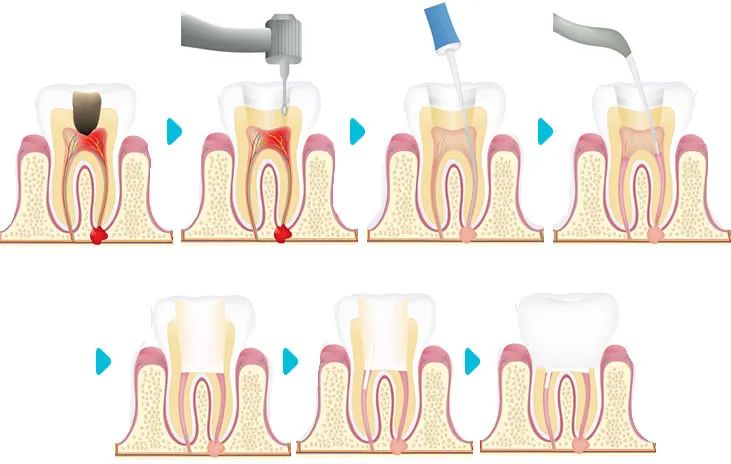
Though the mainland is relatively close, differences in environment, medical procedures, and follow-up care might exist. To minimize risks to neighboring teeth, consider the following:
- **Comprehensive Pre-Treatment Examination**: Have a thorough dental check-up in Hong Kong first to identify any potential issues, especially in teeth adjacent to the affected one.
- **Maintain Complete Treatment Records**: Whether treated in Hong Kong or the mainland, keep all treatment reports and X-rays for future reference.
- **Communicate Oral Conditions Clearly**: Inform your dentist about any other issues such as tooth sensitivity, gum swelling, or discomfort when biting to provide them with useful context during treatment.
**How to Care for Neighboring Teeth?**
Completing a root canal doesn’t guarantee "all clear", particularly when maintaining the health of adjacent teeth:
- **Enhance Oral Hygiene**: Brush twice daily and use dental floss or an oral irrigator to prevent food particles from lodging between teeth.
- **Moderate Dietary Habits**: Limit intake of overly hard or sweet foods to reduce stress on teeth.
- **Regular Check-Ups**: Even after completing treatment, visit the dentist every six months to catch potential problems early.
**Psychological Adjustment is Key**
Fears about affecting neighboring teeth often stem from unfamiliarity with dental procedures. However, modern dental technologies are advanced, and dentists strive to minimize impact on other teeth. For those seeking treatment in the mainland, choosing a reputable clinic typically results in a worry-free experience.
**Conclusion**
A root canal treatment is a specialized procedure targeting a single tooth and generally does not directly affect neighboring teeth. However, severe conditions or delayed treatments might see bacteria spread to adjacent teeth. Whether opting for treatment in Hong Kong or Mainland China, ensure a thorough examination beforehand, choose a reputable dentist, and maintain good post-treatment care habits. This will safeguard your dental health and ensure a lasting, natural smile.
















