









Nerve Necrosis Tooth: Normal Gum vs. a Real Problem
If your gum feels a little sore or looks slightly puffy around one tooth, it’s easy to wonder: is this just a minor gum issue or a sign of something serious like a nerve necrosis tooth? Understanding the difference can save you time, discomfort, and your tooth. Let’s break it down in plain language so you know when to watch and when to act.
What is a nerve necrosis tooth?
“Nerve necrosis” refers to the death of the dental pulp—the soft tissue inside a tooth that contains nerves and blood vessels. When the pulp dies, the tooth is effectively “non-vital” or “dead.” This often follows:
- Deep tooth decay that reaches the pulp
- A cracked or heavily filled tooth
- Trauma (even years ago) that damaged the blood supply
- Repeated dental procedures on the same tooth
- Advanced gum disease that allows bacteria to reach the root tip
A necrotic tooth is not always painful. In fact, some people feel no pain at all—until an infection (abscess) develops around the root. That’s why recognizing early clues is so important.
What do normal gums look and feel like?
Healthy gums are:
- Pink (not fiery red or dusky purple)
- Firm and tight around the teeth
- Not tender to touch
- Not bleeding when you brush or floss gently
- No persistent bad taste or odor
A bit of occasional irritation can happen from brushing too hard, eating spicy foods, or getting a popcorn hull stuck. That kind of gum irritation typically improves quickly once the cause is removed.
Red flags that point to a real problem
A nerve necrosis tooth behaves differently from garden-variety gum irritation. Look for:
- Lingering pain to heat that doesn’t go away quickly, or pain that improves with cold
- A tooth that looks darker or grayer than neighbors
- Swelling next to one tooth, sometimes with a small pimple-like bump on the gum (a sinus tract)
- A foul taste or odor that returns despite good brushing
- Pain when chewing or tapping the tooth; the tooth may feel “taller”
- Sensitivity that started as intermittent and became constant, then oddly went away (a sign the nerve died)
- Facial swelling, fever, or tender lymph nodes in more advanced cases
Gum inflammation (gingivitis) usually causes generalized redness and bleeding in multiple areas, and the pain is more about the gum margin than one specific tooth. A necrotic tooth tends to produce very localized issues centered on a single tooth, especially on biting.
Quick at-home clues to tell gum vs. nerve
- Location: One tooth with a pimple on the gum or localized swelling points to the tooth; widespread bleeding suggests gum disease.
- Triggers: Sharp pain to cold that goes away quickly is often dentin sensitivity or a reversible pulp irritation. Pain that lingers or wakes you at night can signal deeper pulp trouble.
- Color: A single tooth changing color is suspicious for nerve death.
- Timing: Gum irritation improves with careful cleaning in a few days. A necrotic tooth often stays the same or worsens without professional treatment.
How your dentist will figure it out
Denti
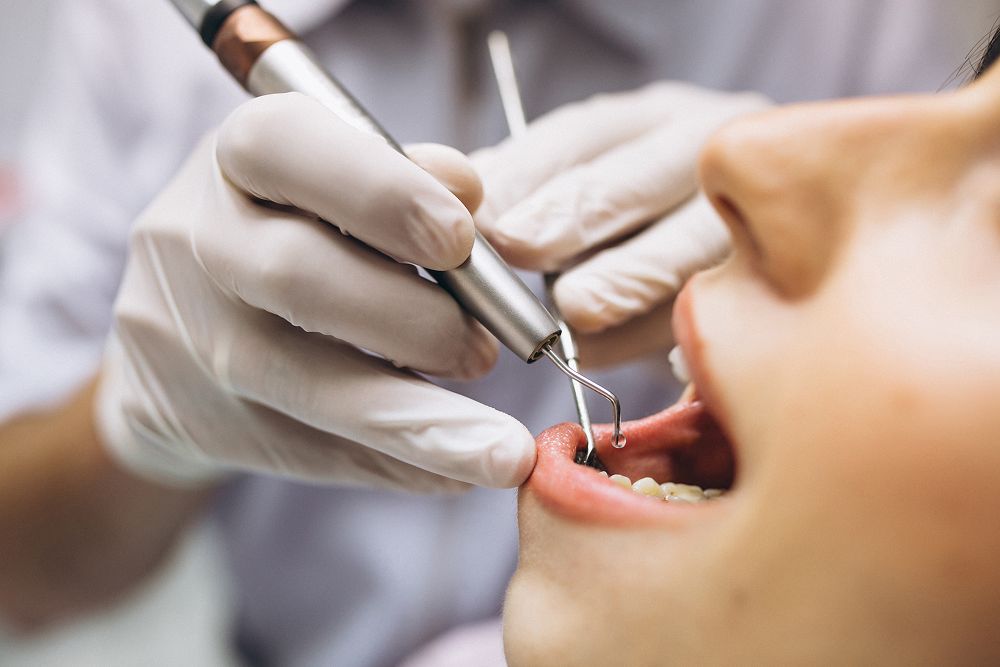
sts use a combination of tests to separate a normal gum issue from a nerve necrosis tooth:
- Vitality tests (cold test or gentle electric test) to see if the pulp responds
- Percussion (tapping) and bite tests to check inflammation around the root
- Gum probing to evaluate periodontal pockets
- X-rays to look for deep decay, cracks, or a dark area at the root tip (periapical radiolucency)
- In some cases, 3D imaging to clarify cracks or complex anatomy
These steps pinpoint the source so you get the right treatment the first time.
What fixes a nerve necrosis tooth?
Because a dead nerve can’t heal, the solution is to remove the infected tissue and seal the canals:
- Root canal therapy by a dentist or endodontist cleans and disinfects the inside of the tooth and fills it to prevent reinfection. A crown is often recommended afterward to protect against fracture.
- Retreatment or apicoectomy (a surgical root tip procedure) may be options if a previous root canal has failed.
- Extraction is considered if the tooth is too damaged to restore or the crack extends below the gumline.
What if it’s a gum problem?
- Improved home care, gentle brushing, and flossing
- Professional cleaning for gingivitis
- Scaling and root planing for periodontitis
- Addressing local irritants like tartar, ill-fitting restorations, or food traps
Why you shouldn’t ignore a necrotic tooth
Leaving a nerve necrosis tooth untreated can lead to:
- A painful abscess and swelling
- Bone loss around the root
- Spread of infection to nearby tissues or sinuses
- Systemic symptoms like fever and malaise
- Emergency situations that are harder (and more involved) to treat
Prevention pays off
You can reduce your risk with a few everyday habits:
- Brush twice daily with fluoride toothpaste and clean between teeth
- See your dentist regularly for exams and X-rays
- Treat cavities early—don’t wait for pain
- Wear a mouthguard for sports and a night guard if you grind
- Fix cracked or chipped teeth promptly
- Manage dry mouth and sip water often if you take medications that reduce saliva
Common questions, clear answers
- Can a dead tooth nerve heal on its own? No. Once the pulp is necrotic, it’s irreversible. The goal is to disinfect and seal the tooth or remove it.
- Will antibiotics alone fix it? Antibiotics may temporarily reduce swelling in acute infections, but they do not remove the source. A dental procedure is necessary.
- If the pain stopped, am I in the clear? Not necessarily. Pain can fade when the nerve dies, but the infection can continue silently and flare later.
The bottom line
Normal gum irritation tends to be mild, short-lived, and widespread. A nerve necrosis tooth is usually about one tooth and often comes with color changes, chewing pain, gum swelling or a pimple, and lingering sensitivity to heat. If you recognize these signs, don’t wait. A timely evaluation can turn a potential emergency into a predictable, tooth-saving fix—often with a comfortable, routine root canal and a strong restoration afterward. Your future self (and your smile) will thank you.
















