









Broken Tooth with Black Inside: When Should You Worry?
You’re brushing your teeth when you notice a chip—and inside the broken area, it looks dark or even black. That sinking feeling is real, but don’t panic. A broken tooth with a black interior doesn’t always mean the worst, yet it’s a sign you should get a timely dental evaluation. Here’s how to understand what you’re seeing, when it’s urgent, and what to do next.
What “black inside” might mean
Several things can make a broken tooth look black or dark within the crack or cavity:
- Tooth decay: The most common cause. Cavities can create a soft, darkened area in enamel and dentin. When the outer enamel breaks away, the decayed dentin underneath may appear brown, gray, or black.
- Dentin exposure and staining: When a piece chips off, the underlying dentin (naturally yellow-brown) can quickly pick up stains from coffee, tea, or smoking, making it look darker.
- Dead or dying tooth (pulp necrosis): After trauma or long-standing decay, the nerve inside the tooth may die, causing internal discoloration that can appear gray or black.
- Old restorations: Metal fillings or staining around older fillings can look black, especially when the surrounding enamel breaks.
- Trapped debris or tartar: Food particles or hardened plaque in a crack or cavity can make the area look dark.
- Blood pigments after injury: Following a hit to the tooth, blood components can seep into dentin and darken it over time.
When to worry: red flags
All broken teeth deserve a dentist’s attention, but some symptoms call for prompt care:
- Spontaneous or throbbing pain, especially waking you at night
- Sensitivity to hot or cold that lingers more than a few seconds
- Swelling in the gums or face, or a pimple-like bump on the gum
- Bad taste or persistent bad breath from the tooth
- Fever or general malaise
- A recent hard hit or fall, especially if the tooth looks dark afterward
- A sharp edge cutting your tongue or cheek
- A crack line that seems to be spreading or a tooth that feels loose
If you notice swelling, fever, or severe pain, treat it as a dental emergency and seek same-day care. Without treatment, infection can form an abscess and, in rare cases, spread.
What to do right now
- Rinse gently with warm salt water to clean the area.
- If you have a fragment, store it in milk or saline and bring it to the dentist.
- Cover sharp edges with dental wax or sugarless gum to protect your cheek and tongue.
- Take over-the-counter pain relievers as directed on the label if you’re uncomfortable.
- Avoid chewing on the affected side, and skip very hot, cold, or sugary foods.
- Consider a temporary dental filling material from a pharmacy to cover an open cavity if you can’t see a dentist immediately.
- Do not use superglue or attempt to force the piece back on.
- Apply a cold compress on the cheek if there’s swelling.
Aim to see a dentist within 24–48 hours for mild symptoms, and urgently the same day for severe pain or swellin
g.
How your dentist will evaluate it
Expect a combination of:
- Visual exam and probing to check for soft, decayed areas
- Bite and percussion tests to assess ligament irritation
- Cold or vitality testing to gauge nerve health
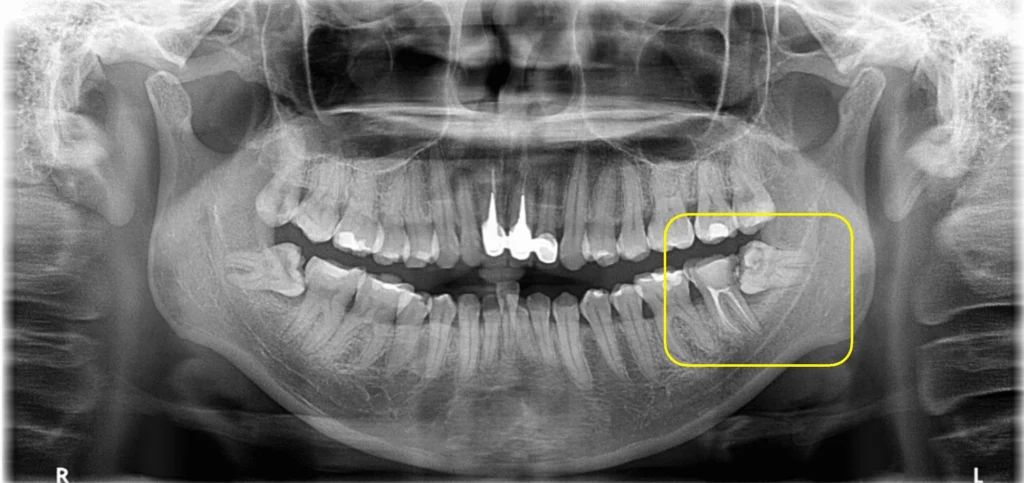
- X-rays to look for deep decay, cracks extending under the gumline, or infection at the root tip
This helps determine whether the dark area is superficial staining, active decay, an old restoration, or a sign of pulp problems.
Treatment options, from simple to advanced
- Minor chip, no decay: Smoothing and polishing, or a small bonding to restore shape and protect dentin.
- Decay limited to enamel/dentin: Tooth-colored filling or bonding.
- Larger structural loss: Onlay or crown to reinforce the tooth and prevent further fracture.
- Pulp inflamed or infected: Root canal therapy to clean and seal the inside, followed by a crown. If the tooth has turned dark after the nerve has died, internal whitening may be possible after root canal.
- Vertical or deep fracture below the gum: In some cases, extraction is the safest choice. Restorative options can include an implant, bridge, or partial denture.
Not every black-looking area needs a root canal, and not every broken tooth needs a crown—but leaving a black, broken tooth untreated often means the problem grows, making treatments more complex later.
Can it wait?
- Might wait briefly: A tiny chip with no pain or sensitivity, and no signs of decay. Still, schedule a checkup soon to seal exposed dentin and prevent staining or sensitivity.
- Shouldn’t wait: Any pain, ongoing sensitivity, darkening after trauma, visible cavity, foul taste, swelling, or a crack that seems to be deep. Early care can stop decay, prevent infection, and save the tooth.
Prevention going forward
- Brush twice daily with fluoride toothpaste and floss once a day to reduce decay risk.
- Wear a mouthguard during sports and consider a nightguard if you grind your teeth.
- Avoid biting hard objects like ice, pens, or hard candies.
- Keep up with regular checkups and cleanings; tiny cracks and early cavities are easiest to fix.
- Address sensitivity early—lingering sensitivity can be an early warning sign.
Quick answers to common questions
- Is a black broken tooth always decayed? No. It could be stain, an old metal filling, or internal discoloration after trauma. A dental exam is the only way to be sure.
- Will it heal on its own? Enamel doesn’t heal like skin. Small chips can be smoothed or bonded, but cracks and cavities don’t self-repair.
- Do I always need a root canal? Only if the nerve is inflamed beyond healing or infected. Your dentist will assess with tests and imaging.
Bottom line
A broken tooth with a black interior is your cue to act, not panic. Sometimes it’s a superficial stain; other times it’s decay or a dying nerve that needs timely treatment. The sooner you get a professional evaluation, the more options you’ll have to relieve pain, control infection, and preserve your natural tooth.
















