









Should It Hurt to Chew After: Harmless or a Warning Sign?
If you’ve ever bitten into a sandwich and felt a twinge of pain, you’re not alone. Chewing pain can catch anyone off guard, especially after recent dental work or a dental mishap. The big question is: should it hurt to chew after? Sometimes a little tenderness is normal. Other times, it’s your body waving a red flag. Understanding which is which can help you respond confidently and protect your oral health.
What Kind of Chewing Pain Are You Feeling?
Not all pain feels the same, and paying attention to the details can help you determine what’s going on:
- Sharp, sudden pain when biting down: Often linked to a high filling, cracked tooth, or a bite alignment issue.
- Dull, lingering ache: Could point to inflammation in the tooth or surrounding tissues, clenching, or sinus pressure.
- Sensitivity to hot or cold after chewing: Sometimes normal after dental work, but ongoing sensitivity may need evaluation.
- Pain with jaw movement: Might be related to your jaw joint (TMJ) or overworked chewing muscles.
Common Harmless Reasons Chewing Might Hurt
There are benign reasons chewing can feel off for a few days, especially if you recently had dental work or irritated your gums.
- After a filling or crown: Mild tenderness is common for a few days as your tooth adjusts, particularly if the filling is deep or close to the nerve.
- After a cleaning or scaling: Your gums can feel a little sore, especially if there was tartar buildup or inflammation.
- After extraction: Chewing near the area can feel tender for about a week, and you’ll want to avoid chewing on that side at first.
- Gum irritation: Hard or crunchy foods, popcorn kernels, or brushing too aggressively can leave gums sensitive.
- Bruxism (clenching or grinding): Morning chewing pain can come from nighttime grinding that strains teeth and jaw muscles.
- Sinus pressure: Upper teeth share space with the sinus cavities, and sinus congestion can make chewing feel uncomfortable.
When Chewing Pain Is a Warning Sign
Some types of pain suggest a problem that needs professional attention. Consider these warning signs:
- Pain that worsens over time or lasts more than a week
- Severe pain when biting down, especially with a sharp “zing”
- A filling or crown that feels “too high,” causing uneven bite pressure
- Swelling in the face or gums, a pimple-like bump on the gum, or a bad taste
- Fever, warm or throbbing sensation, or trouble opening your mouth
- A cracked or chipped tooth after biting something hard
- Numbness or prolonged sensitivity long after dental treatment
These signs may indicate a high bite, cracked tooth, inflamed nerve, infection, or dry socket (after extraction). Early diagnosis can prevent bigger complications.
How Long Should Chewing Pain Last?
- After a filling or crown: Mild sensitivity for a few days is normal. If chewing still hurts after a week, especially if it feels like you’re hitting the tooth first, the bite may need adjustment.
- After an extraction: Soreness is expected for 3 to 7 days. Rising pain around day 3 with bad taste or odor can signal dry socket.
- After root canal: Tenderness when chewing can last a few days.
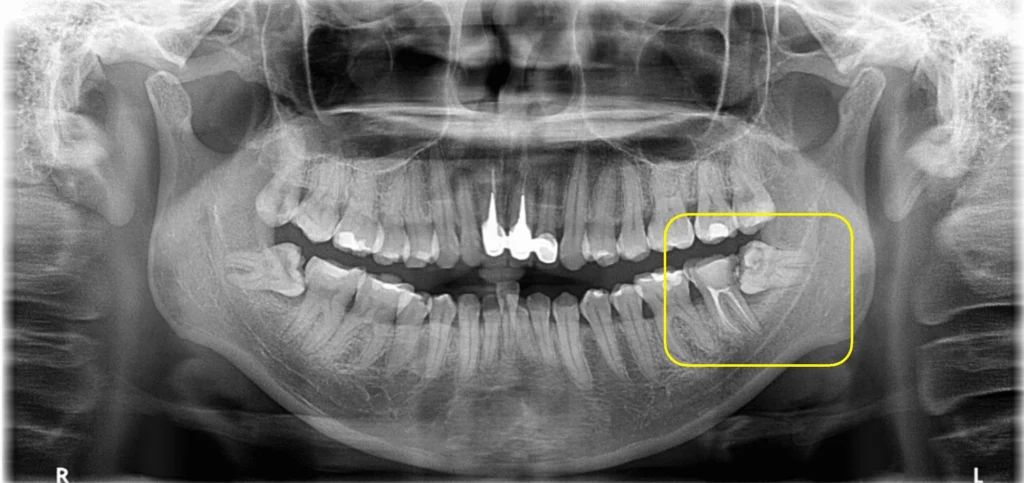
Intense or increasing pain warrants a check-in.
- Without recent dental work: Pain that persists beyond several days or keeps recurring should be assessed.
Self-Care Tips to Reduce Chewing Pain
When it’s mild and likely harmless, you can try practical steps at home:
- Favor the other side: Give the sensitive area a rest for a couple of days.
- Soft foods: Think yogurt, eggs, soups, smoothies, or steamed vegetables.
- Warm saltwater rinses: Soothe gums by rinsing gently 2 to 3 times a day.
- Over-the-counter pain relief: Use as directed if you’re able, and avoid aspirin on an extraction site.
- Cold compress: For swelling or jaw soreness, apply cold to the outside of your cheek in short intervals.
- Adjust habits: Avoid very hard, sticky, or very hot/cold foods while healing.
- Nighttime protection: If you clench, consider a mouthguard recommended by your dentist.
What Your Dentist Might Check
If chewing pain doesn’t resolve quickly or presents with warning signs, a dentist can pinpoint the cause:
- Bite analysis: Ensuring a filling or crown isn’t too high or uneven.
- Crack detection: Using special lights or imaging to spot hairline fractures.
- Nerve health: Testing sensitivity to determine if the tooth’s nerve is inflamed or infected.
- Gum and bone health: Checking for periodontal issues that can make teeth tender.
- Sinus involvement: Evaluating if sinus pressure is referred to teeth.
- TMJ and muscles: Assessing jaw alignment and muscle tension.
Prevention Tips for Pain-Free Chewing
- Keep regular cleanings and exams: Early detection prevents bigger issues.
- Wear protection: Use a mouthguard for sports and consider a nightguard if you grind.
- Be mindful with hard foods: Break up hard candies, nuts, or crusty bread; avoid chewing ice.
- Brush gently but thoroughly: Use a soft-bristled brush and don’t skip flossing.
- Address sinus issues: Treat allergies or colds to reduce referred dental discomfort.
- Listen to your bite: If something feels “off” after dental work, call your dentist promptly.
FAQ: Quick Answers
Is it normal for a tooth to hurt when chewing after a filling?
A little sensitivity is common for several days. Persistent or sharp pain when biting may mean your bite needs a small adjustment.
Why does chewing hurt if I haven’t had dental work?
Possible causes include a cracked tooth, gum inflammation, clenching, or sinus pressure. If it continues more than a few days, schedule an exam.
Can chewing pain mean infection?
Yes, especially if there’s swelling, fever, a bad taste, or a pimple-like bump on the gums. Seek care promptly.
Could it be my jaw joint?
If pain worsens with wide opening, yawning, or chewing tough foods and is centered near the ear, the TMJ or chewing muscles may be involved.
The Bottom Line
A little tenderness when chewing can be part of normal healing after dental work or minor gum irritation. But pain that is sharp, worsening, or persistent is a warning worth acting on. Your mouth is good at signaling when something isn’t right. When in doubt—especially if you notice swelling, fever, or a bite that feels off—contact your dentist. Quick attention can relieve discomfort and protect your long-term oral health.
















